- FinTrends
- Posts
- 💷 Pound Takes a Pounding
💷 Pound Takes a Pounding

Jason Mountford
September 01, 2022
This is The Hedge, the newsletter that buys the first round. If you've got mates who'd like to read this every week, hit that forward button and let 'em know!
Reading Time: 3m 02sec
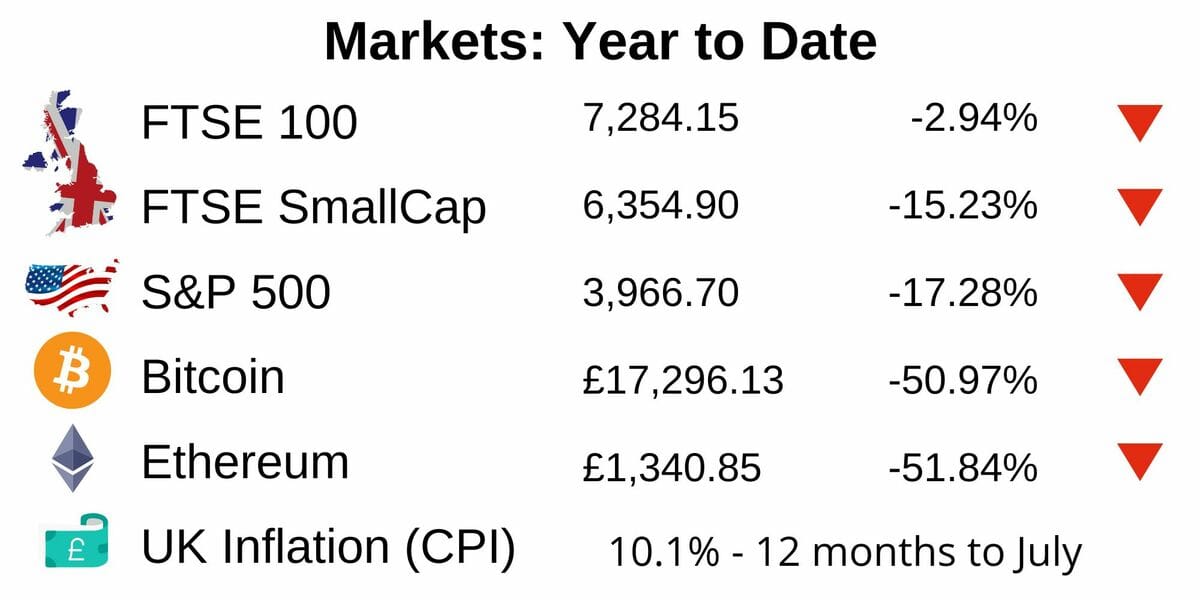
Prices accurate as of approximately Wednesday 8PM BST.
💷 Pound Takes a Pounding
Pound Sterling has had a rough trot lately. It's had its worst month against the US dollar since 2016, dropping 4.5% since the start of August.
So what do currency movements mean for you? Well, there's the obvious one. If you're going on holiday to the US then your shit beer and incredibly delicious-yet-diabetes-inducing food is going to cost you a bit more.
Outside of that, the strength of the pound impacts the economy in a pretty major way. Countries all over the world import certain goods and services and export others. In the UK, we don't exactly have the right climate for growing mangoes, so we import them.
We do have a world class higher education and financial services sector, so attract foreign money to those, which is classed as an export.
This relationship between imports and exports is what's known as the trade deficit or trade surplus. If a country has a trade deficit, it means that they import more than they export. In that case, you want to have a strong currency because it means buying stuff from other countries costs you 'less'.
A weak currency means you have to convert more of it to buy stuff in USD or EUR or anything other currency.
The UK currently has a trade deficit, of around £28 billion. It means that if the pound falls in value against our major trading partners, the price we pay goes up, even if the producers haven't changed their prices.
The US is our largest single trading partner with £70 billion in annual imports to the UK so this currency move isn't great. With that said, if you combined the European Union, it makes up a way bigger piece of the pie with £340 billion worth of imports.
Thankfully, the pound has held strong against the Euro, and is up just over 5% over the past 5 years.
🤝 How Much Does a Financial Advisor Charge?
📈 Nothing Lasts Forever
Here are some really interest graphics from Genuine Impact. The first looks at the biggest companies in the world from 2000, and the biggest companies now. Some huge names that didn't even exist back then, and some equally big names that have fallen from grace.
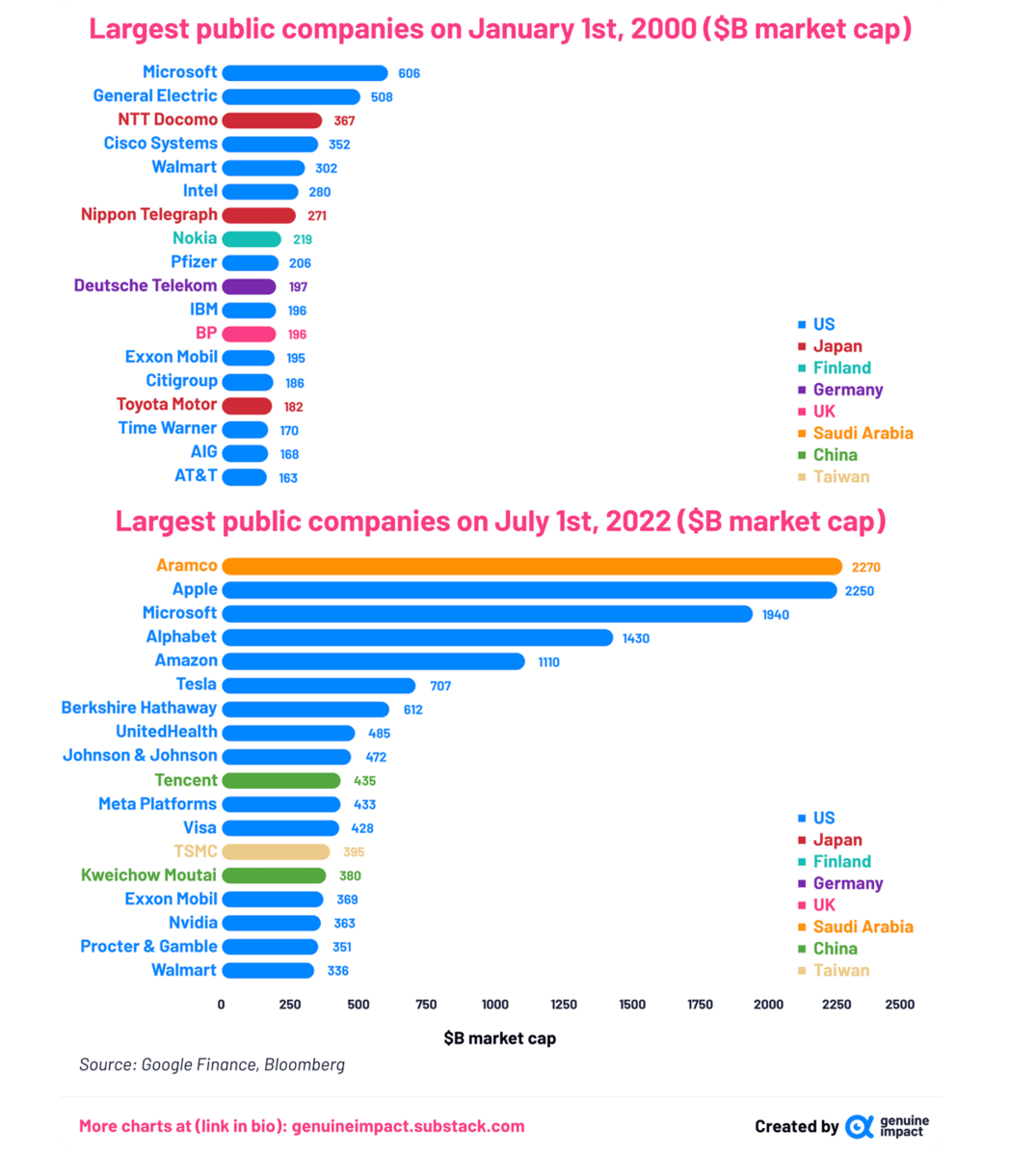
Pretty interesting to see China effectively take the place of Japan. Especially when you consider their demographics. Japan is ageing and their population actually declined by 628,000 last year. China has obviously gone through massive population growth and has become an economic powerhouse.
Who knows what the future might hold, but another graphic had some info that surprised me.
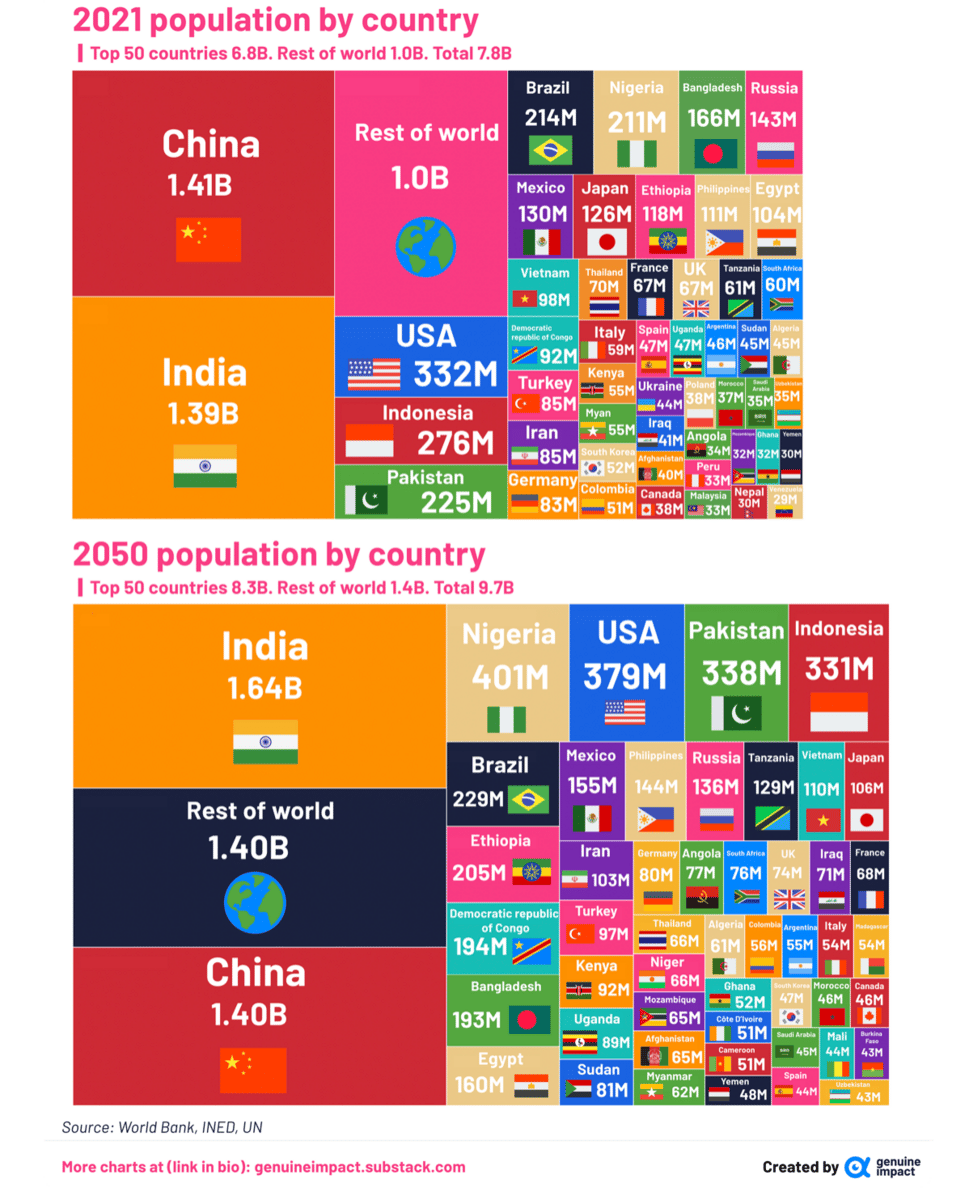
India is expected to be the world's most populous country by 2050. I'm not surprised at that. But look at Africa. Nigeria, Ethiopia, DRC, Kenya, Uganda, Mozambique, Ghana, Cameroon, Angola, Cote D'Ivoire, Morocco, Burkina Faso, Algeria, South Africa, Niger and Tanzania. 16 out of the top 50 are in Africa. That's crazy.
🌏 Snippets
Snapchat is struggling and they've announced plans to layoff 20% of their workforce.
JP Morgan Chase (the world's biggest bank) has had their German offices raided as they're under investigation for tax evasion.
Brent Crude oil is back down below USD$100 a barrel, continuing the downward trend from its peak of almost USD$128 in March.
UK based renewable energy company Sea Wave Energy have created basically a big lilo that generates power. They claim it's the "cheapest clean energy ever."
The Issa brothers (Owners of EuroGarages and Asda) continue their takeover in the UK, with a new £600m deal done to purchase Co-Op's petrol stations.
See you next week 🚀
Jason